Into the Caucasus
The day doesn’t start well at all. I woke up in the middle of the night with a migraine. By morning it’s just as bad, with its usual symptoms of headache and nausea. I have a coffee for breakfast and little else, and set off feeling rather scared… and on an almost empty stomach.
My plan for today is to reach Atabe, which seems to be a small village high up in the Caucasus mountains, in the north of Georgia. To get there from Zhinvali, I’ll follow the track that runs alongside one of the rivers feeding the Zhinvali reservoir.
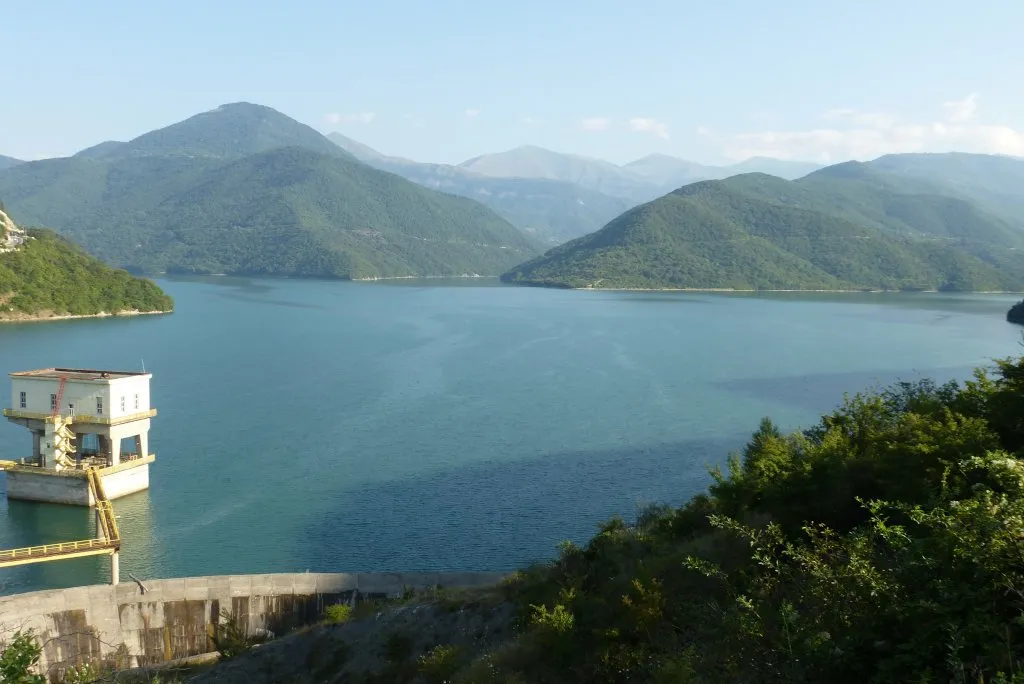
It’s a curious place. Apparently, the real Zhinvali lies at the bottom of the reservoir, which was built in Soviet times. To rehouse all its inhabitants, they decided to build a new Zhinvali, about five kilometres south of the original. Walking into this new Zhinvali is a real trip back to Soviet times: big square buildings among green spaces and wide avenues. Sadly, the country’s economic situation shows in the general state of the town, which is very run-down (though not dirty) and old.
I start on a well-surfaced road that takes me up to the top of the dam… first fifteen minutes, first meltdown. From there on, no big surprises. The road runs alongside a river, so it climbs all the time. My head is still bothering me, so I take every chance to stop for a break. Here, resting with a new friend.
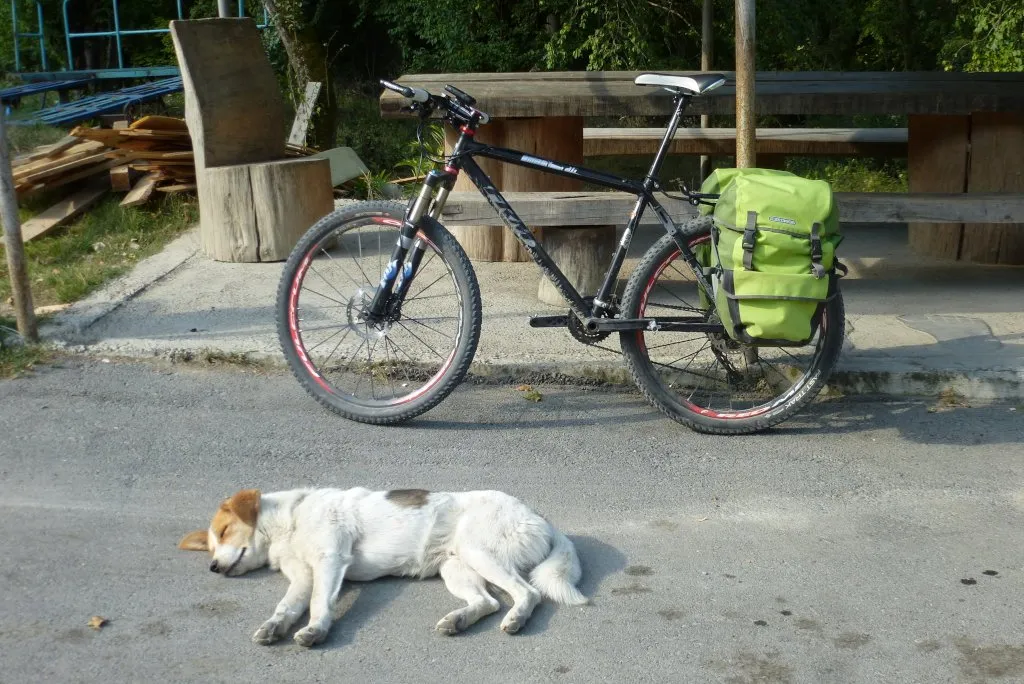
Unfortunately, I’m doing this trip without my handlebar bag, which is really handy for keeping everyday things within reach, like the camera. The bag came with me, but it had to stay behind at the hotel in Tbilisi because its handlebar mount broke on the journey. Lesson learnt: on the next trip I’ll pack it dismantled.
The road soon turns into a dirt track. There’s very little traffic, the temperature is pleasant and the climb is gentle. On top of that, the landscape has changed and is much greener. Pure bliss.
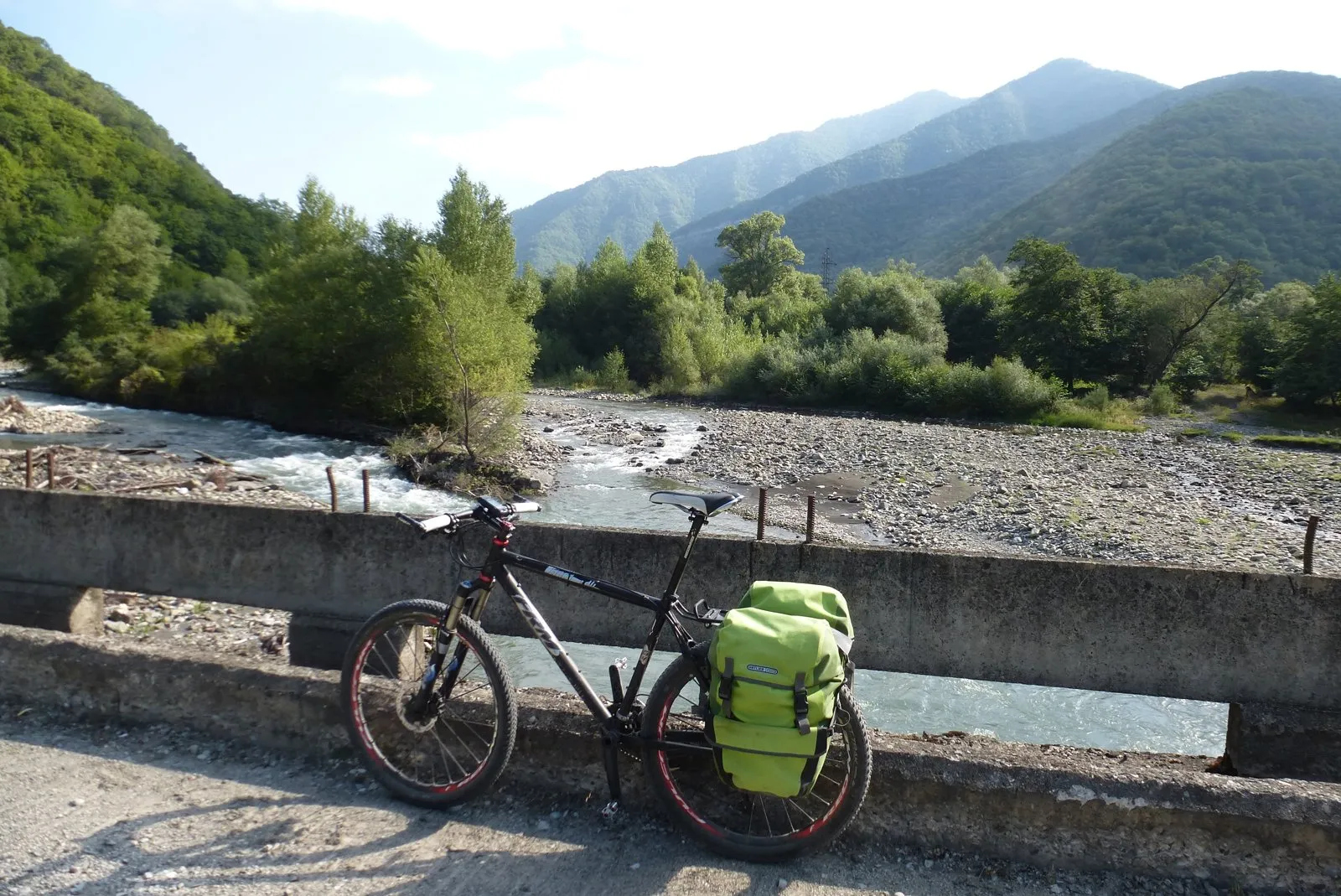
Every so often the track crosses from one bank of the river to the other. The higher I climb, the worse the state of the track. The lorries that overtake me, all of them many years old, throw a mixture of white dust from the track and black smoke from the engine at me, which makes me look utterly comical. Luckily for my lungs, there’s very little traffic.
A little further on I reach Khomi, where there’s a hostel with a restaurant. I knew I’d come across it because, while planning the trip, it was one of the places I’d picked as a possible overnight stop. Although it’s too early for lunch, I do make a short stop to get my strength back, drink plenty and eat some fruit. The migraine has almost gone and my stomach has settled, so the food goes down really, really well.
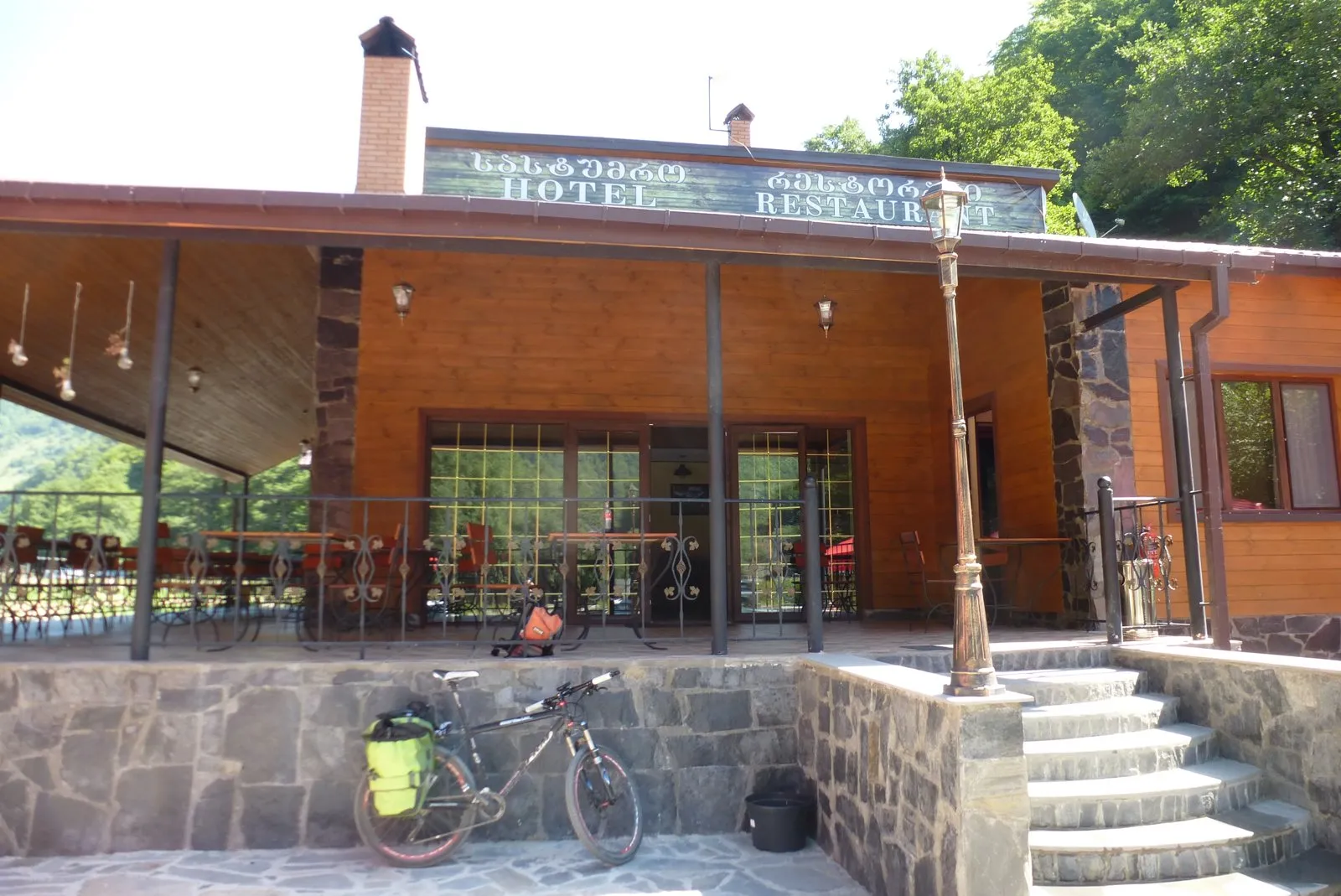
But there’s still a good handful of kilometres of track to go, and the hardest part is yet to come. For more than an hour, this will be my view:
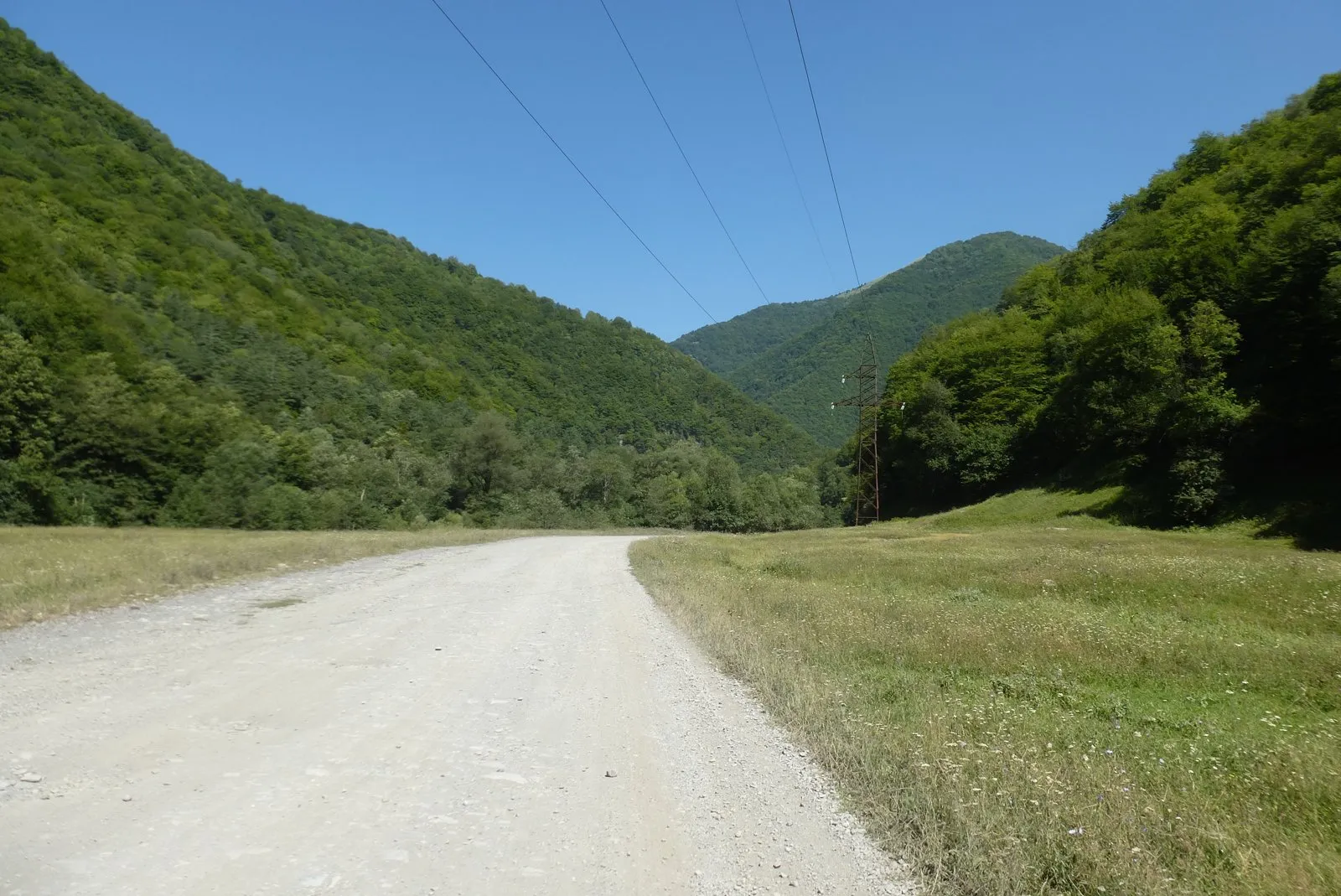
The track gets more broken with every metre, and both my hands and my backside are begging for a rest. From many kilometres back all the way to the finish, I’ll only find a single kilometre of tarmac, right as I ride through the village of Korsha. I take the chance to make a pit stop, as this is the last village I’ll come across before the end of the route in Atabe. And I reckon I’ve got at least two hours to go.
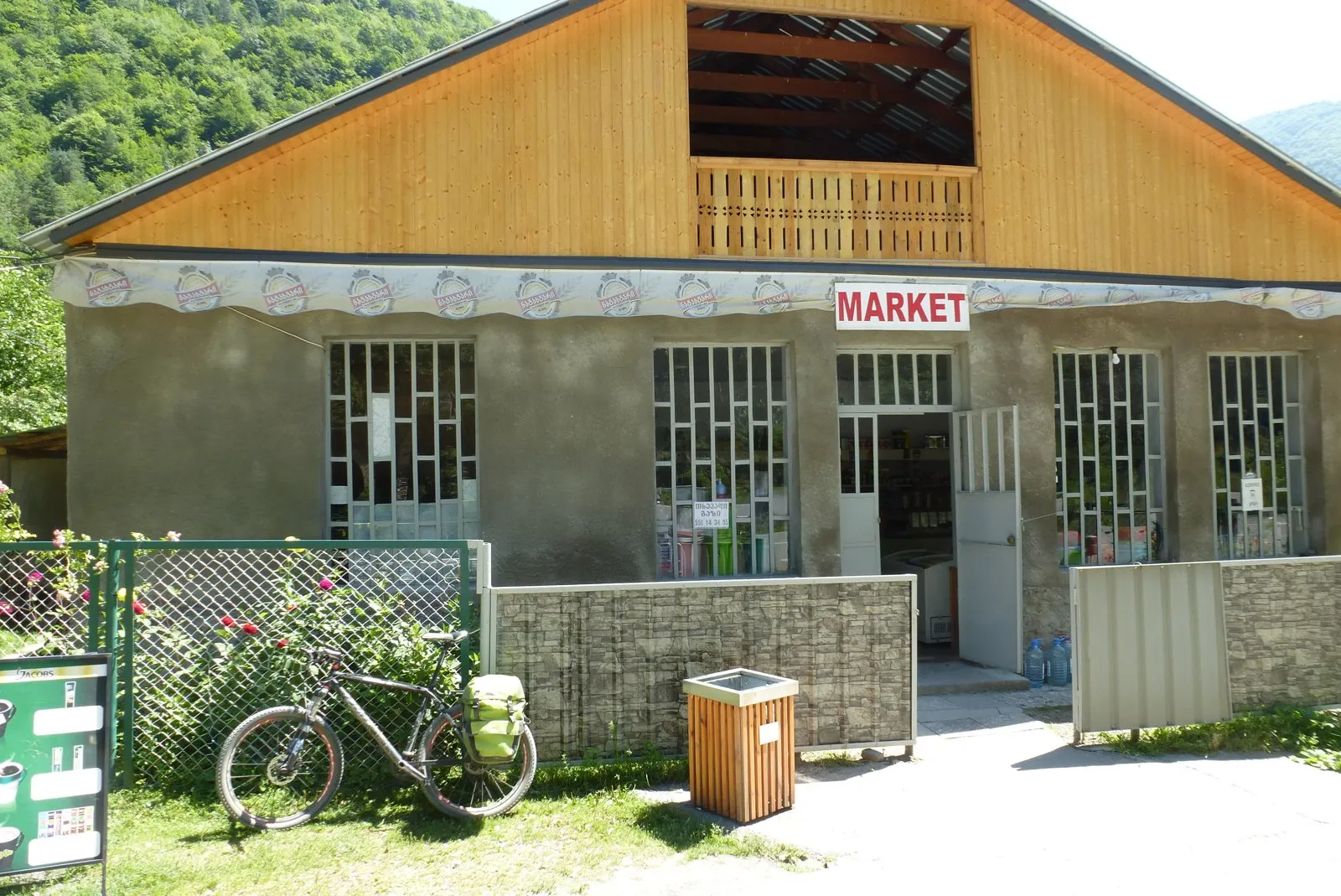
You couldn’t say the village is very well stocked… all I find is this little shop, where I was hoping for something more substantial than fruit or ice cream. Well, let’s be honest, ice cream always goes down well, no complaints there. But it still strikes me that, being the first shop I’ve seen in several hours, it isn’t a bit better stocked. Soft drinks and ice cream are fine for the passengers of the marshrutka, as minibuses are known in Georgia, but not for the people who live here.
Still, I have a good feeling about the guesthouse waiting for me in Atabe. I’m sure I’ll be able to treat myself to a proper feast for dinner.
I follow the track, which keeps getting steeper, and every so often I come across a fountain. Georgians are very proud of their water, and rightly so. There are fountains of cool, crystal-clear water everywhere. But it isn’t the number of fountains that catches my eye, it’s their decoration. Each fountain usually has a stone plaque with a sort of photograph set into it. It isn’t a relief; it’s completely smooth. It looks like a kind of headstone… I don’t know why, but I’d like to find out. As I don’t think I’ve explained it very well, here are a couple of photos.
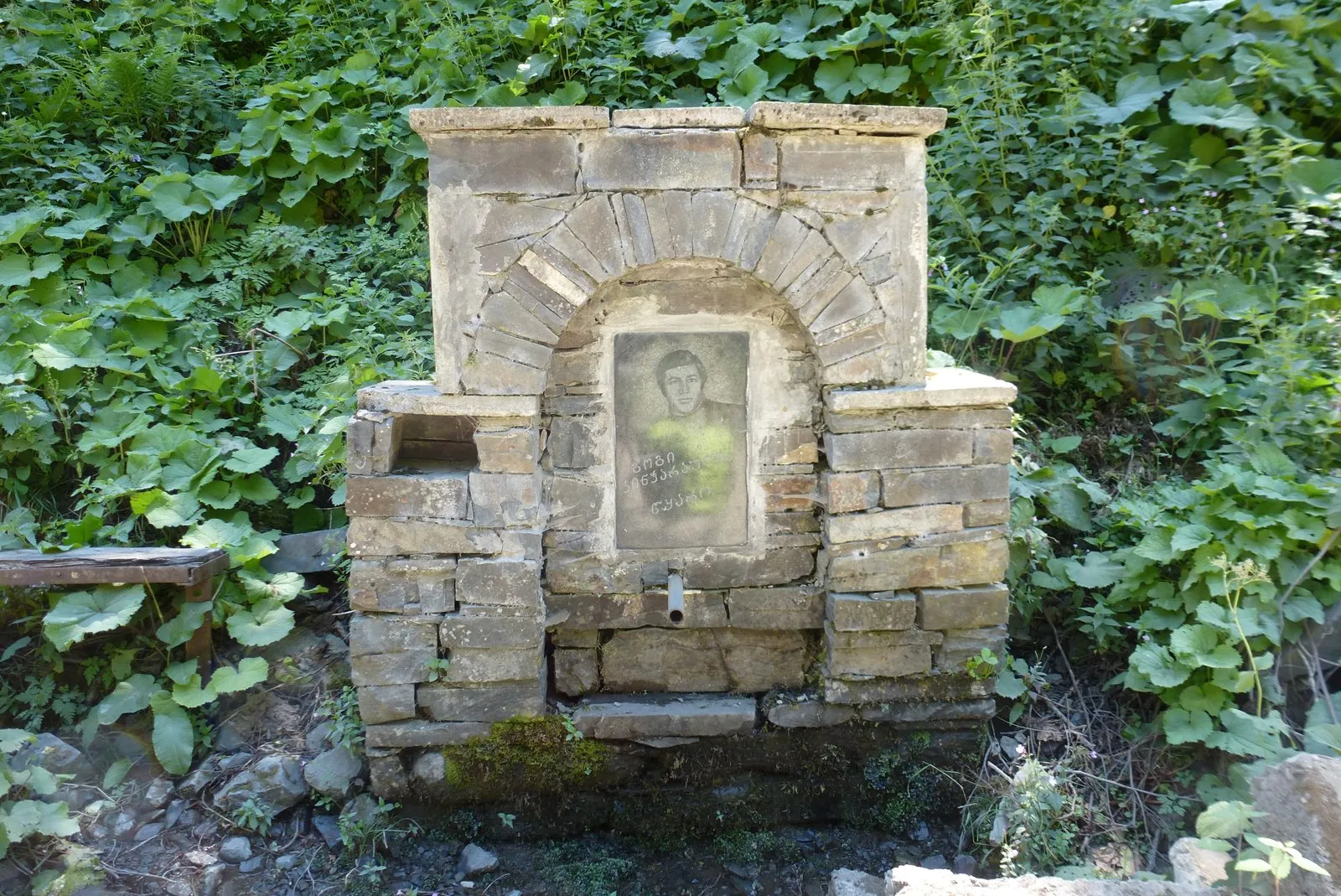
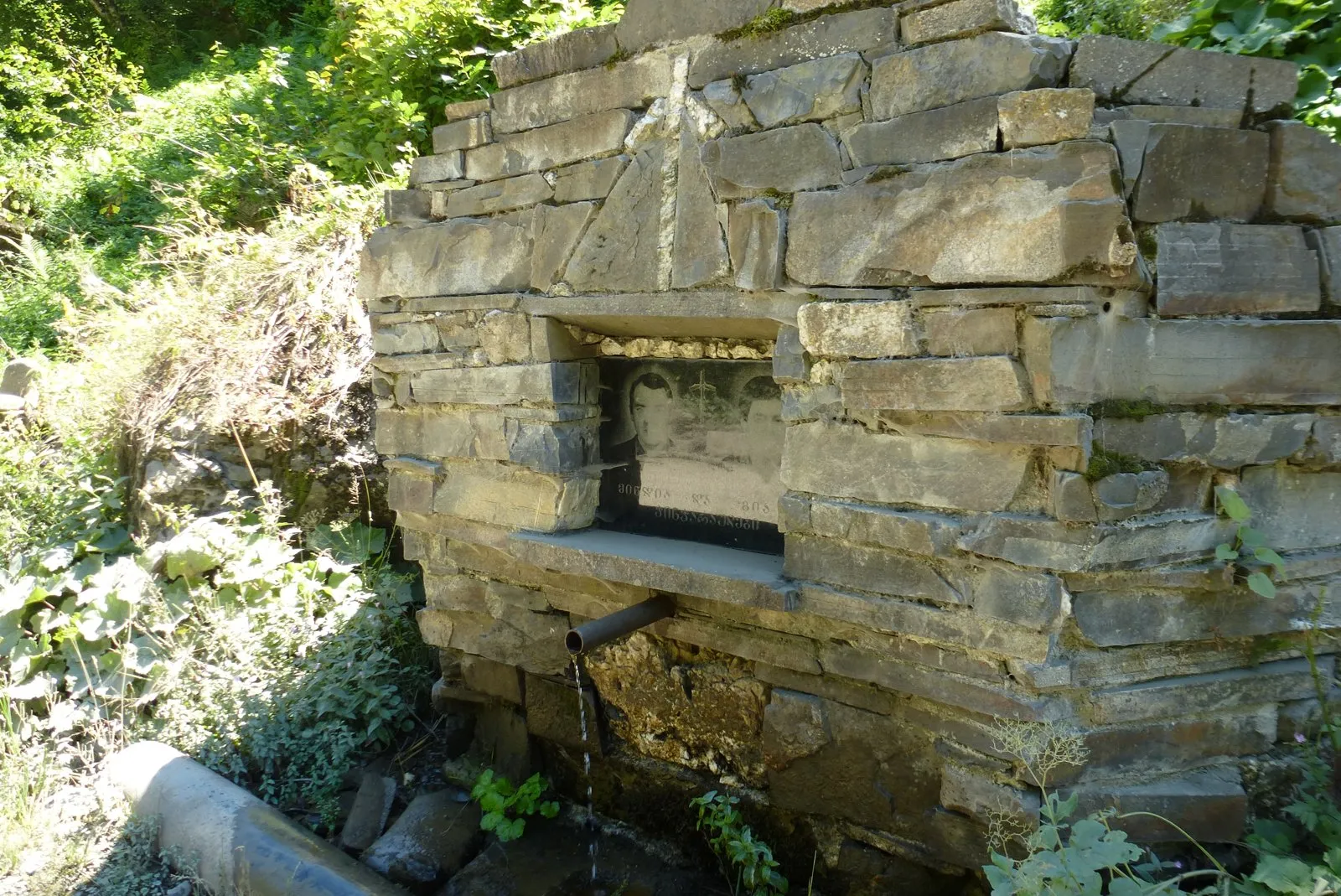
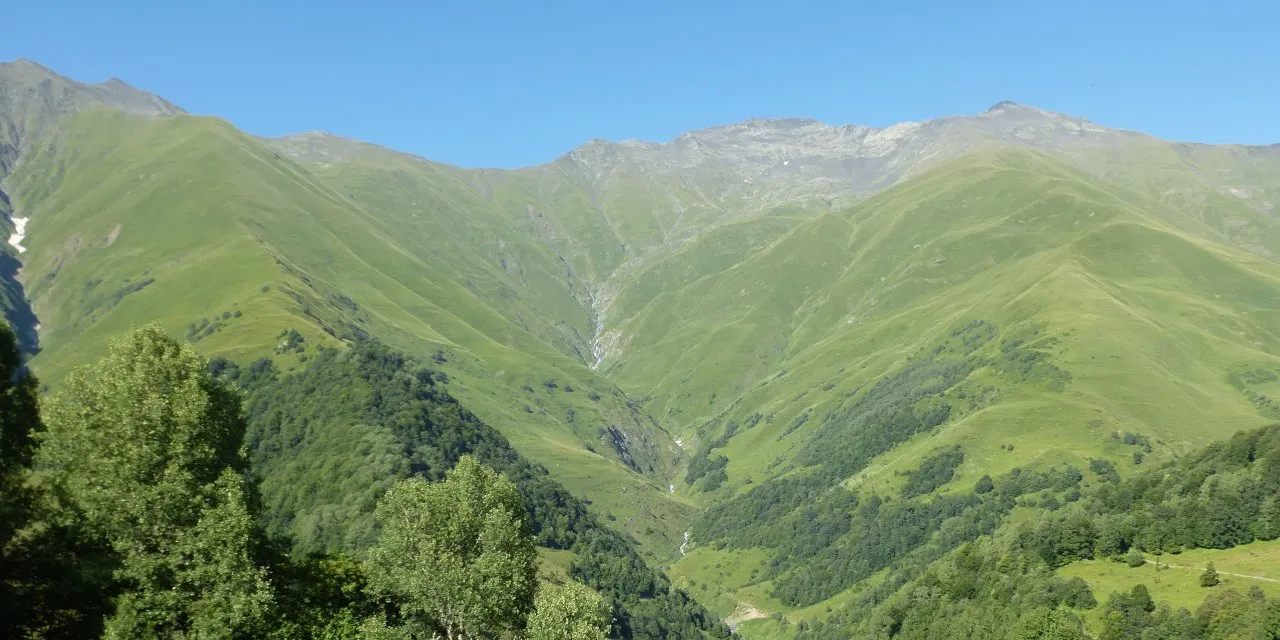
At last I reach the turn-off that will take me to Atabe. I have no elevation profiles or map of the area, so I’m going in a bit blind. When I reach the turn-off, I realise that getting to Atabe is going to be harder than I expected. The track has a good surface and good grip, but it’s so steep that I have to get off and push the bike. And it will be like that again and again, although I have to admit the views are worth it. At almost 2,000 metres, Georgia looks stunning.
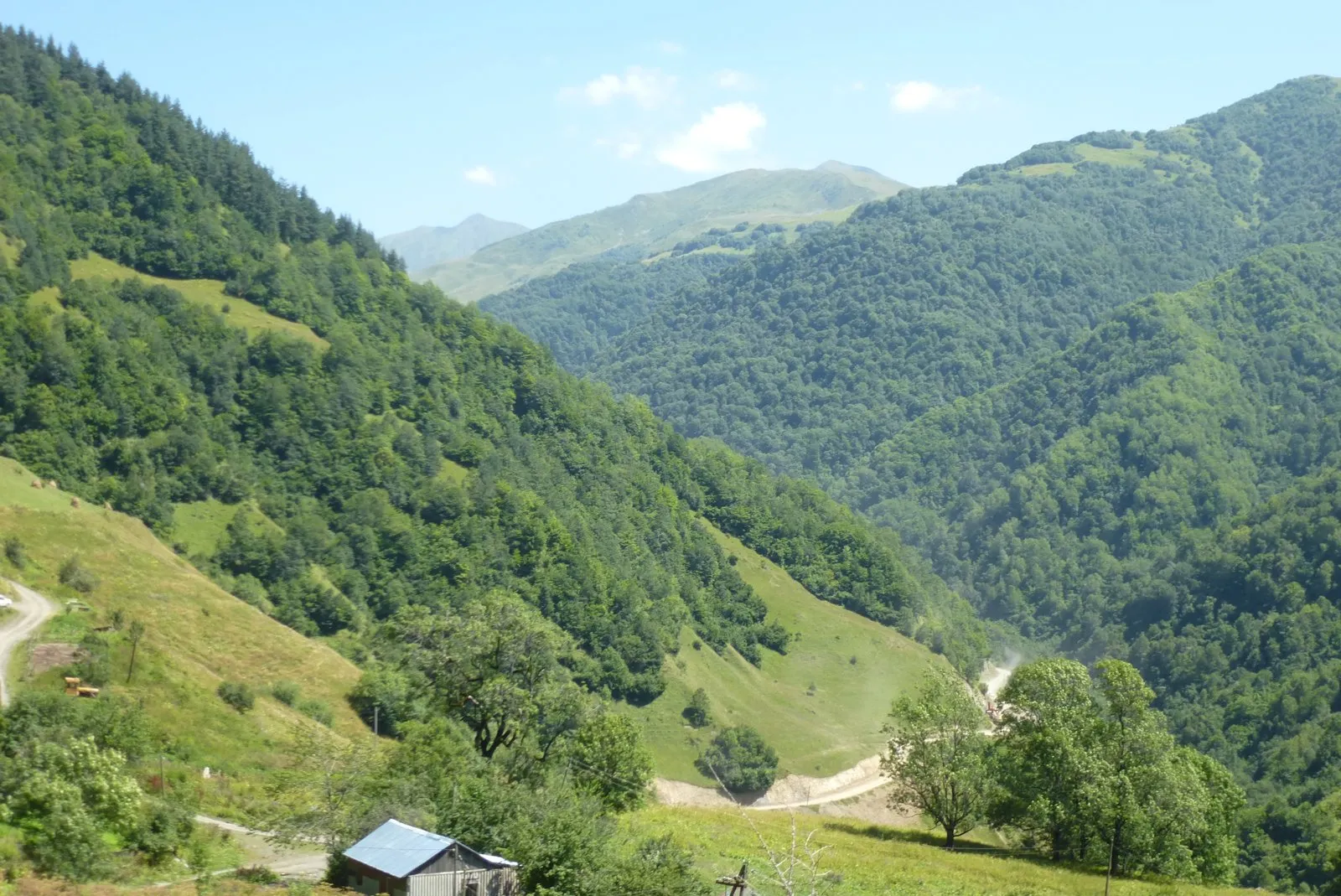
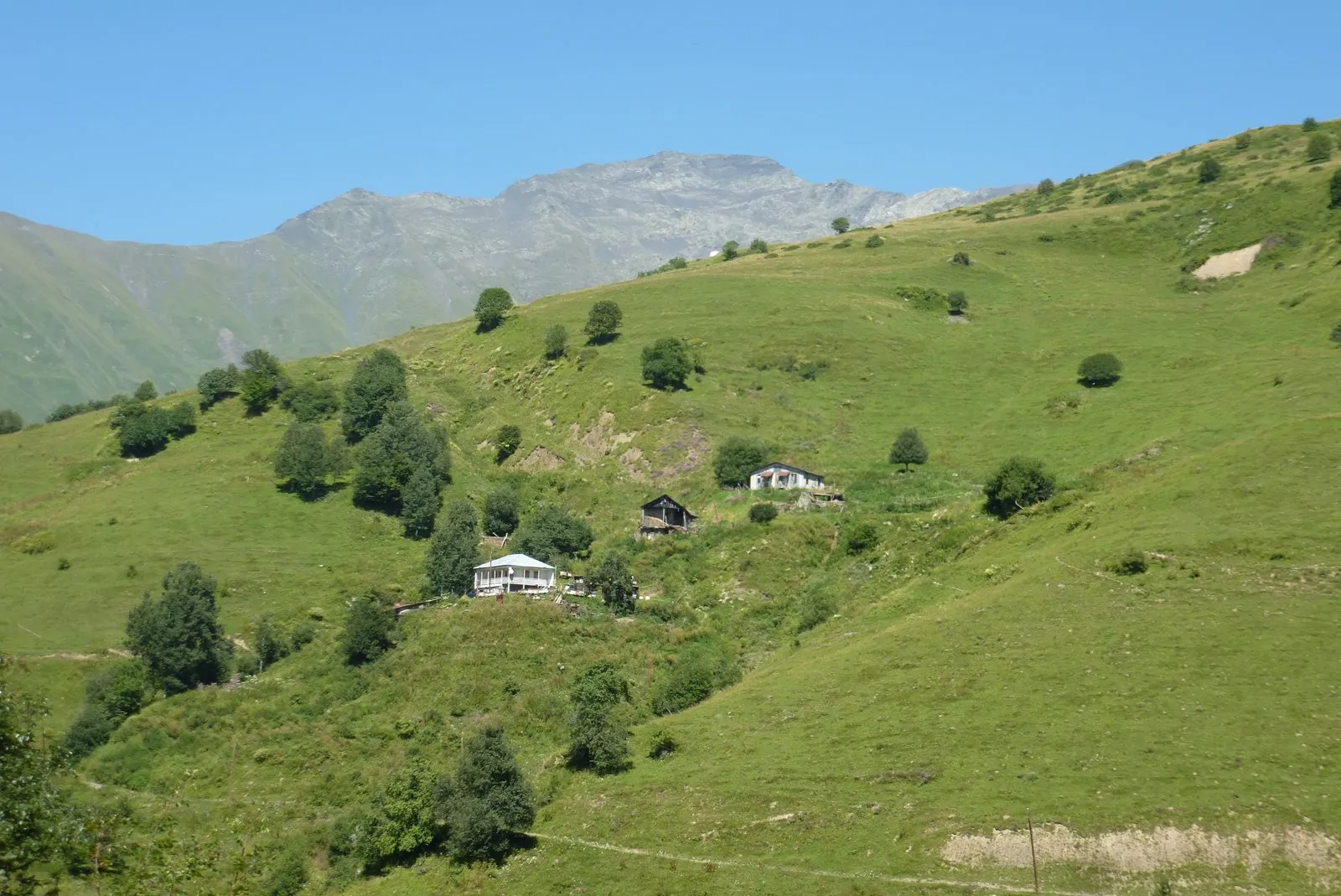
I’m not too sure where I’m going, as I have no maps of the area and there are no signs either. Still, I was told the guesthouse was signposted, so I suppose that sooner or later I’ll see a sign. And judging by the landscape, it can’t be much further… because I’m running out of mountain!
And so it is. A little further on, after an hour of gruelling climbing in which I’ve had to push the bike more than I’d have liked, I reach the guesthouse. It’s a small cabin at the highest point you can get to. From here up, just mountain and rock.
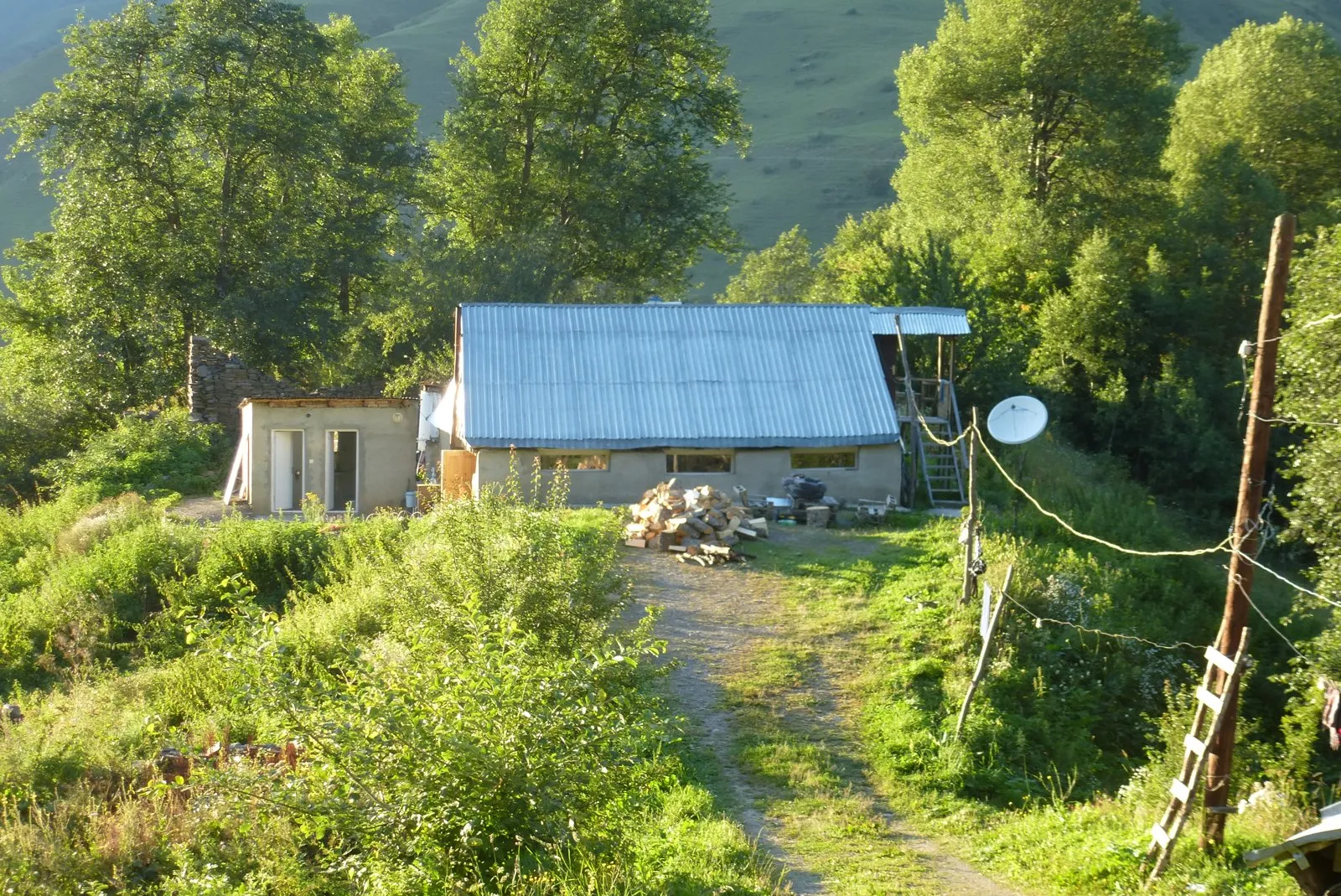
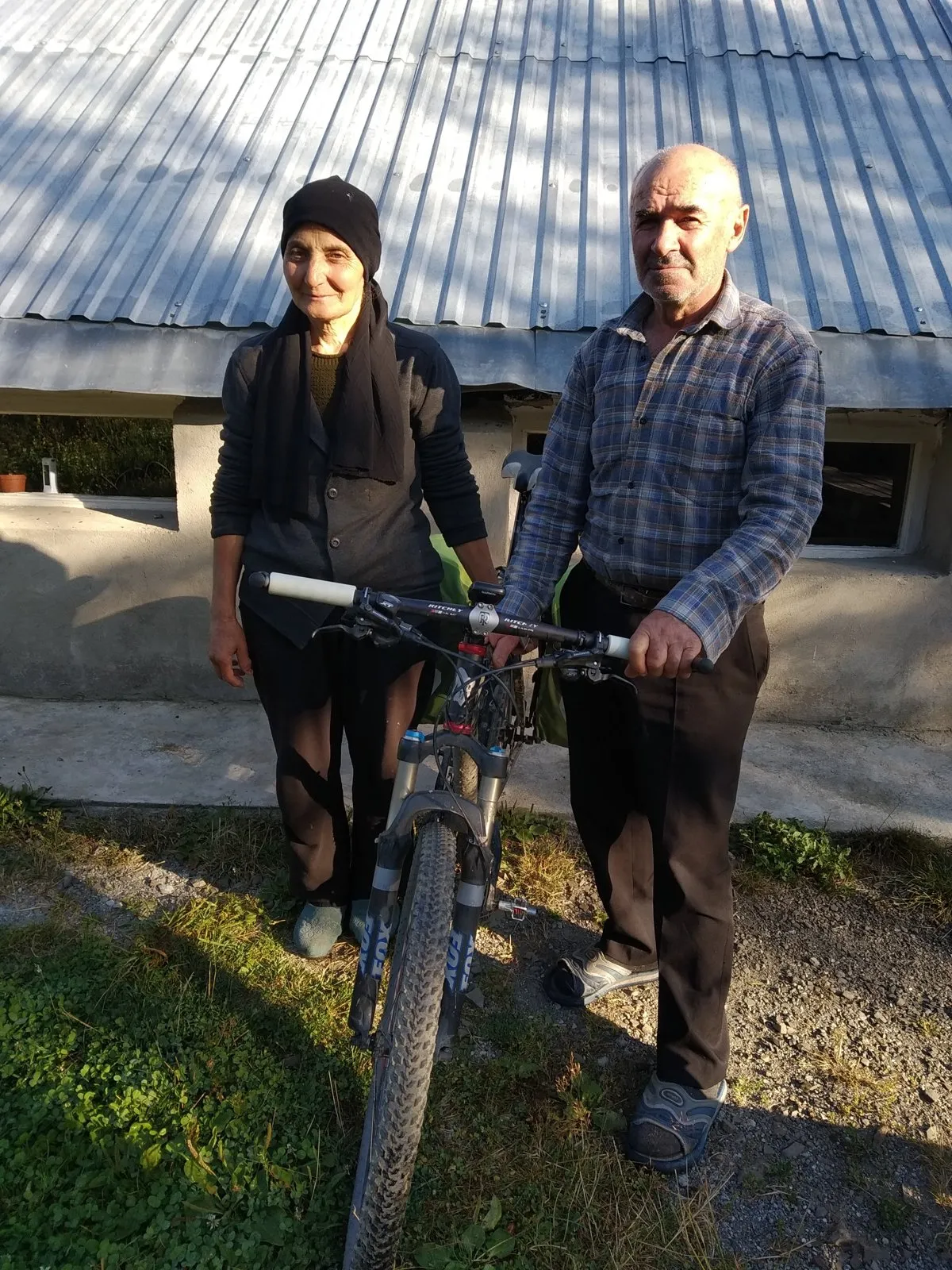
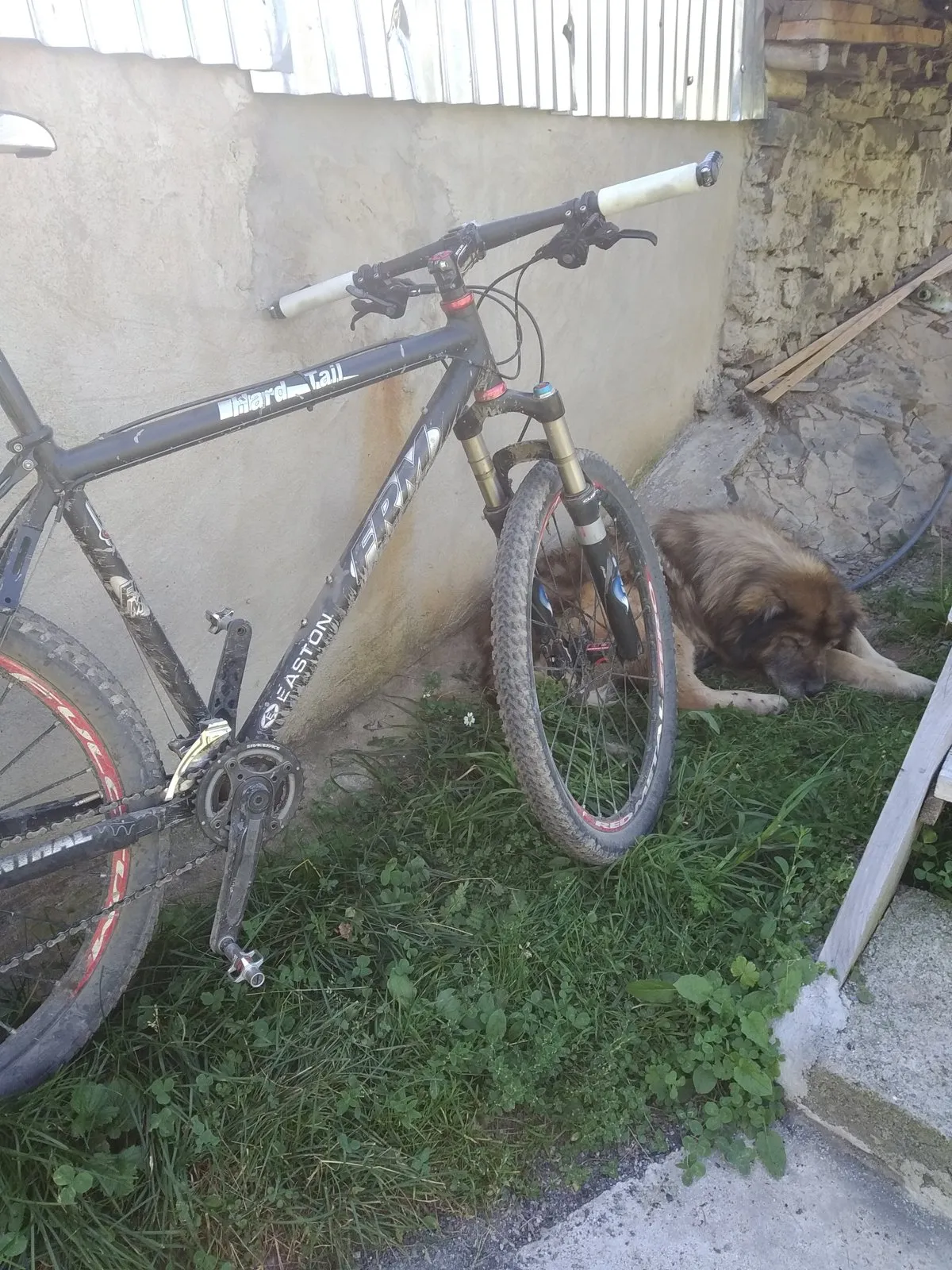
A lady who doesn’t speak a word of English welcomes me. It’s very hard to communicate in words when you don’t have a single word in common, not even a similar one… but we all understand each other with gestures. First things first: put the bike somewhere safe.
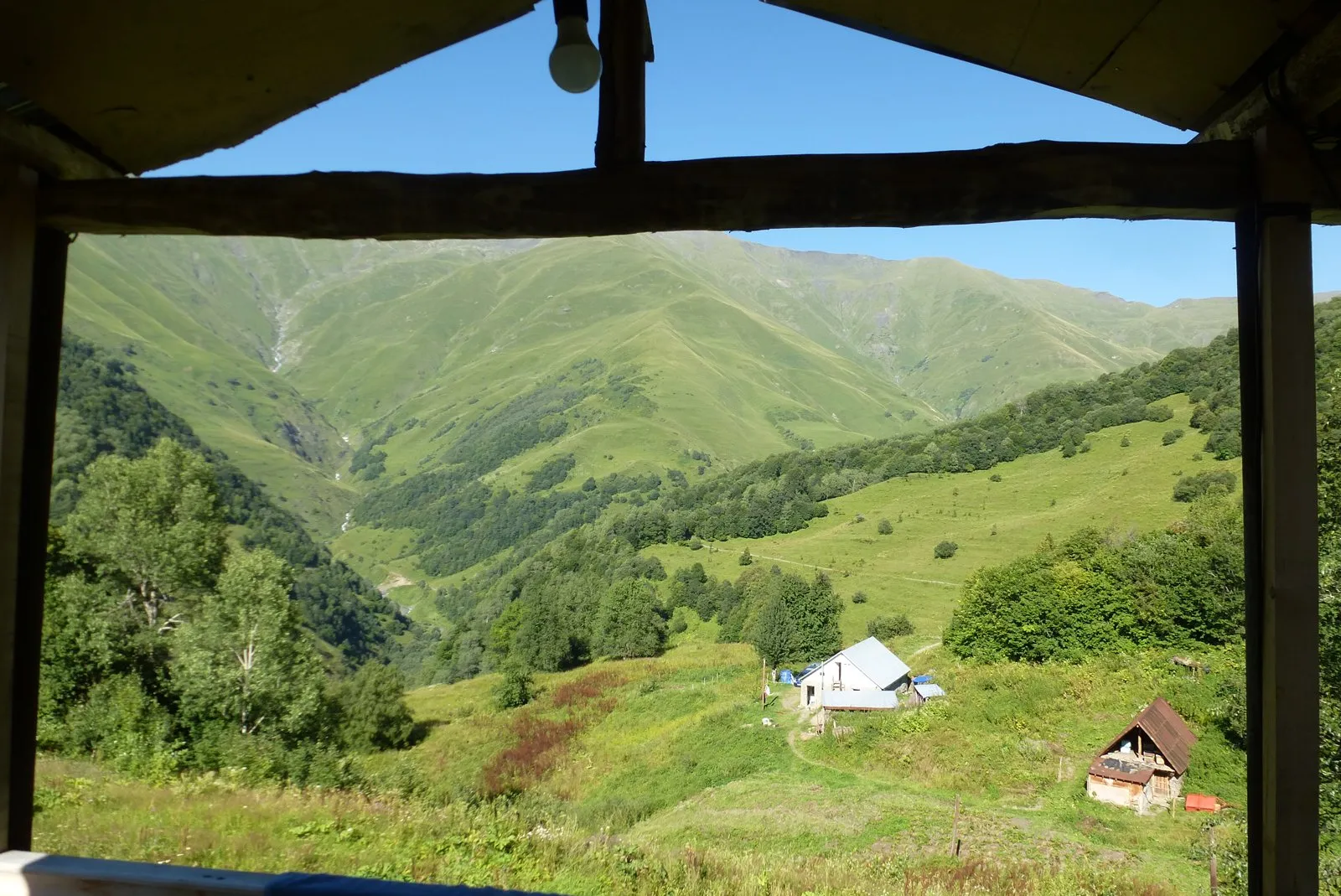
Then she shows me what will be my room. These are the views.
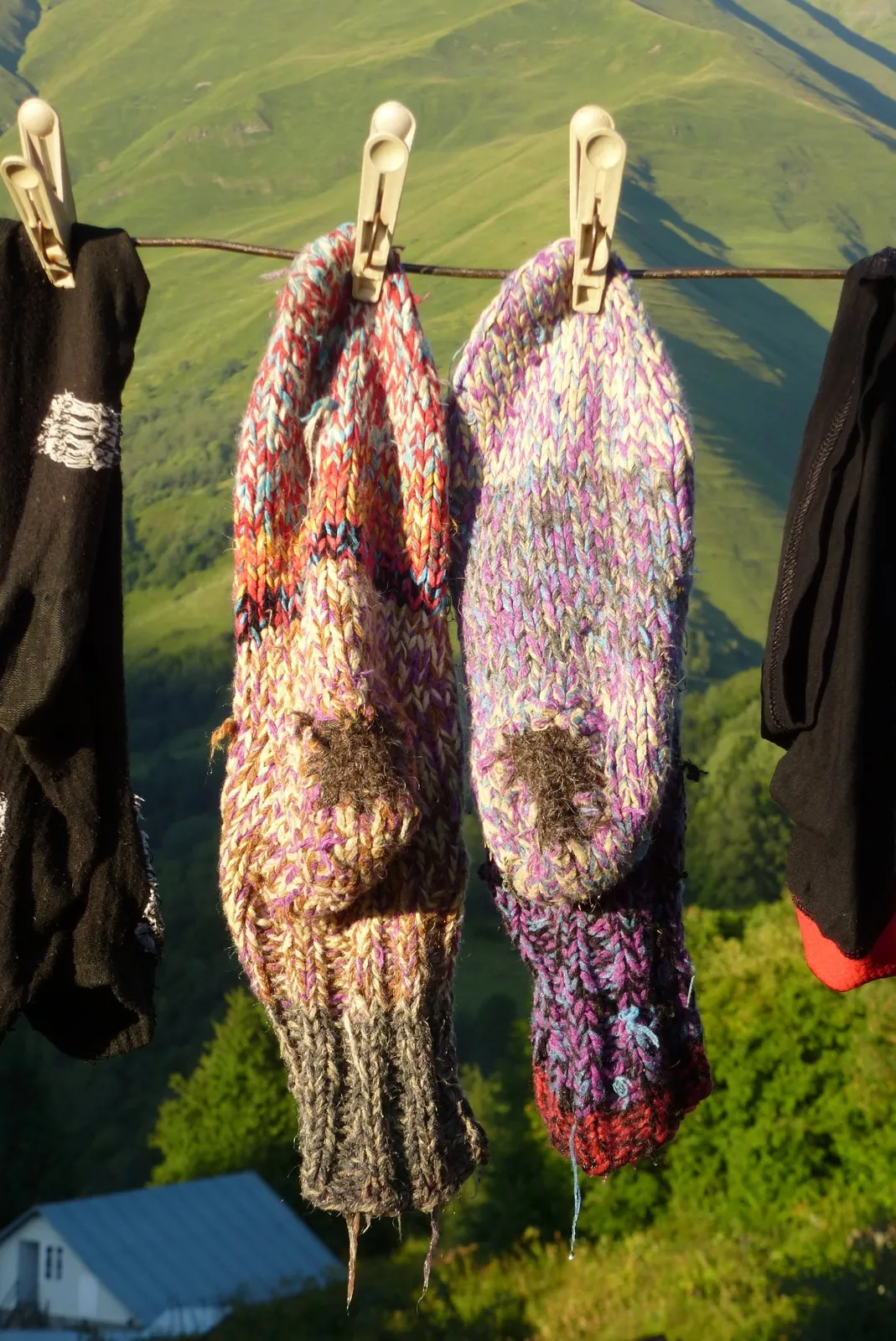
And of course, time to clean up and do the laundry.
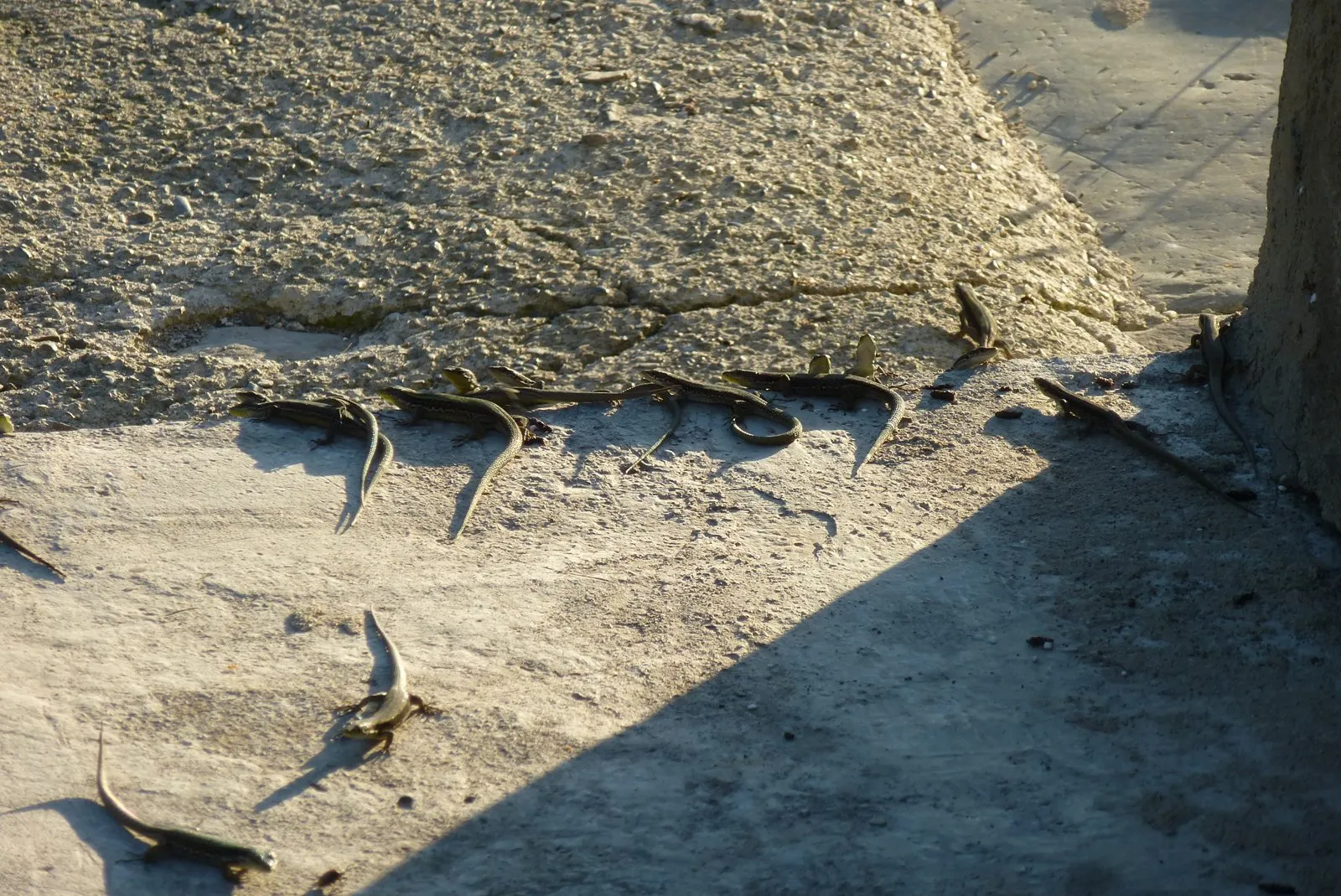
If there’s one thing that stands out about this place, it’s the number of lizards you find wherever the sun shines. So many that you have to be careful not to step on them. Inside the guesthouse I find a few drawings by earlier visitors, and every one of them has a lizard in it.
Anyway, the truth is I’m pretty hungry. I said I had a good feeling about this place, and it isn’t going to let me down. Exhibit A: the afternoon snack.
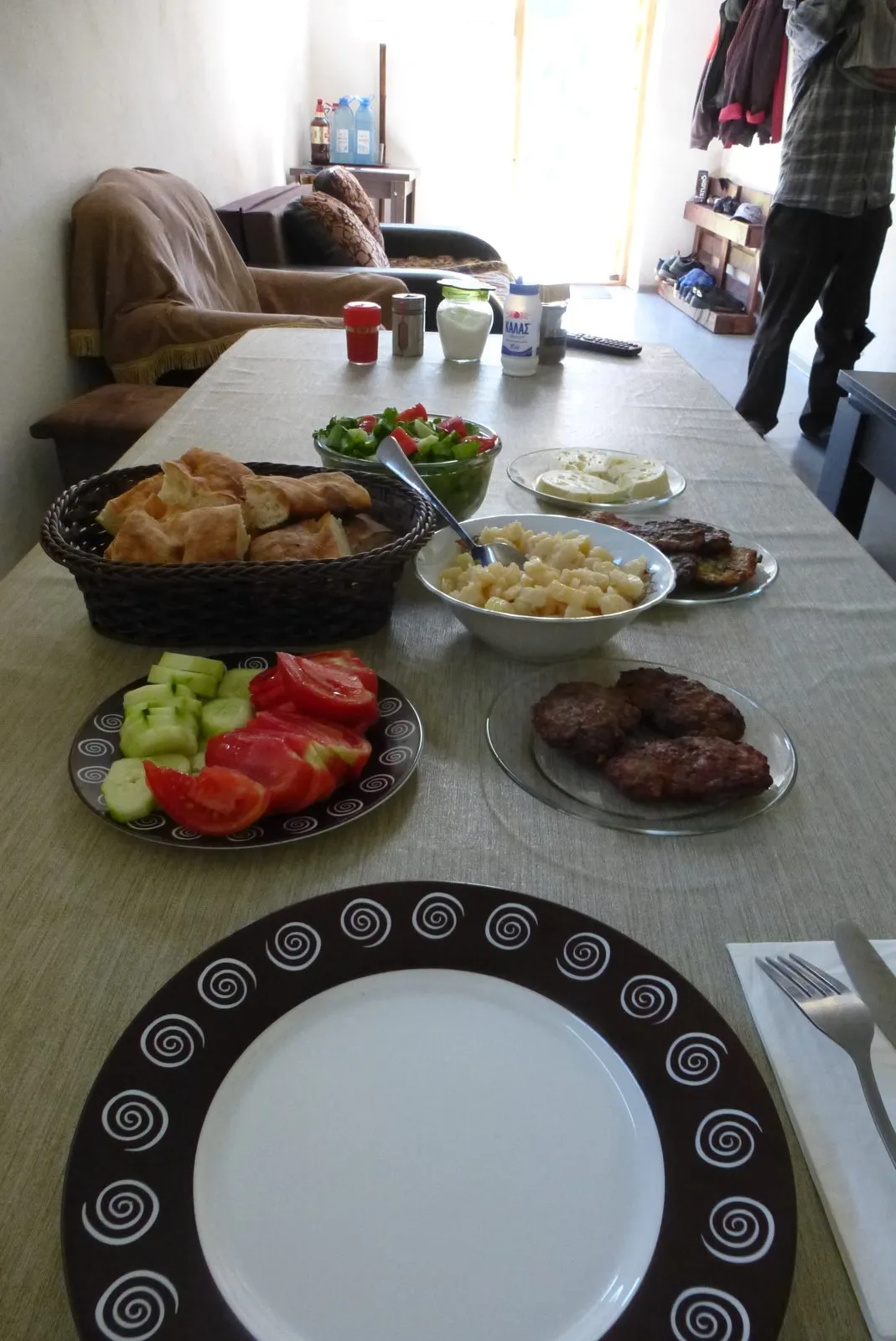
The snack almost runs into dinner, so I spend a good while eating and chatting with the son of the couple who run the guesthouse. He’s the only one who speaks English. It turns out he lives and studies in Zhinvali, the town I left this morning. This is their village house, where they come in summer, when the weather allows, to make cheese, collect honey and, with a bit of luck, put up the odd tourist.
Needless to say, I’ve rarely slept anywhere so quiet and comfortable. The effort was worth it, and there’s a bright side: tomorrow, the first ten kilometres are downhill!