Heading north
Carrying on with my latest series of routes of the leave from home and end up who-knows-where kind, or else get home having set off from somewhere else, I had the idea of riding the Ruta de la Plata, the old Roman Silver Route. Crossing the peninsula from south to north struck me as interesting and, although I didn’t have enough days off to start from Seville, maybe I could ride a shorter stretch and leave the south for another time. A very useful resource for planning this route is the Ruta Vía de la Plata website. The information on this site, with resources for both cyclists and walkers, helped me decide which stretch to ride. Starting from Béjar, just over 500 kilometres lay between me and home. Béjar, here we come!
The first stage, believe it or not, starts in Oviedo. By car, mind you, and very, very early. We hit the road before dawn, aiming to reach Béjar and be pedalling by nine in the morning. We stick to the plan and they drop me off on the Calzada de Béjar, the old Roman road, at nine on the dot.
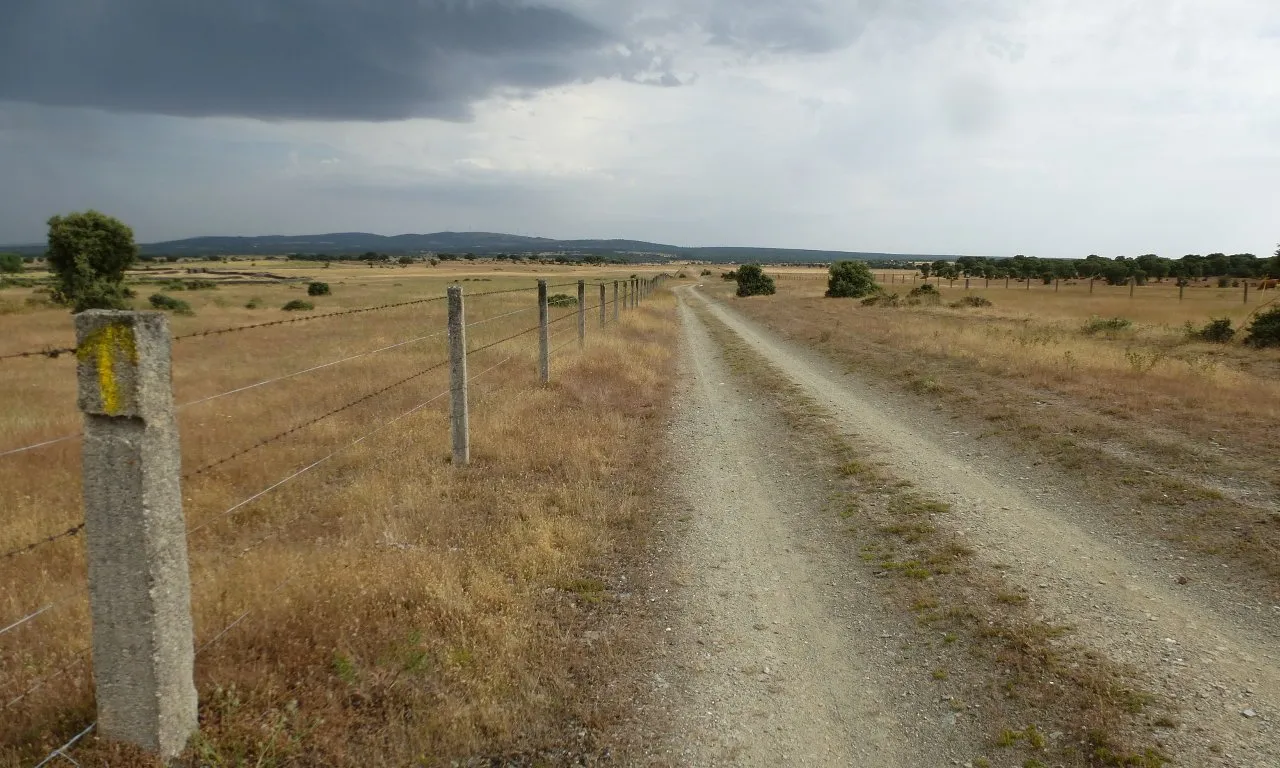
Heading north and in no hurry, I ride along tracks with a good surface and hardly a bend. With a lot of luck I keep dodging the storm, or the storm keeps dodging me, I’m not sure which. What is clear is that we’ve been sizing each other up all morning: I ride along very wet tracks and see the clouds and the lightning not far off. The route doesn’t seem to get much traffic. For one thing, I don’t meet a single pilgrim all morning, and for another, I can see the tracks need maintenance they haven’t had for a long time. In some places I have to leave the track and take the road, after a comic scene in which I literally disappear into vegetation taller than me. Even so, the Calzada de Béjar takes over the landscape. It’s wide with a good surface, and the scenery is very pretty.
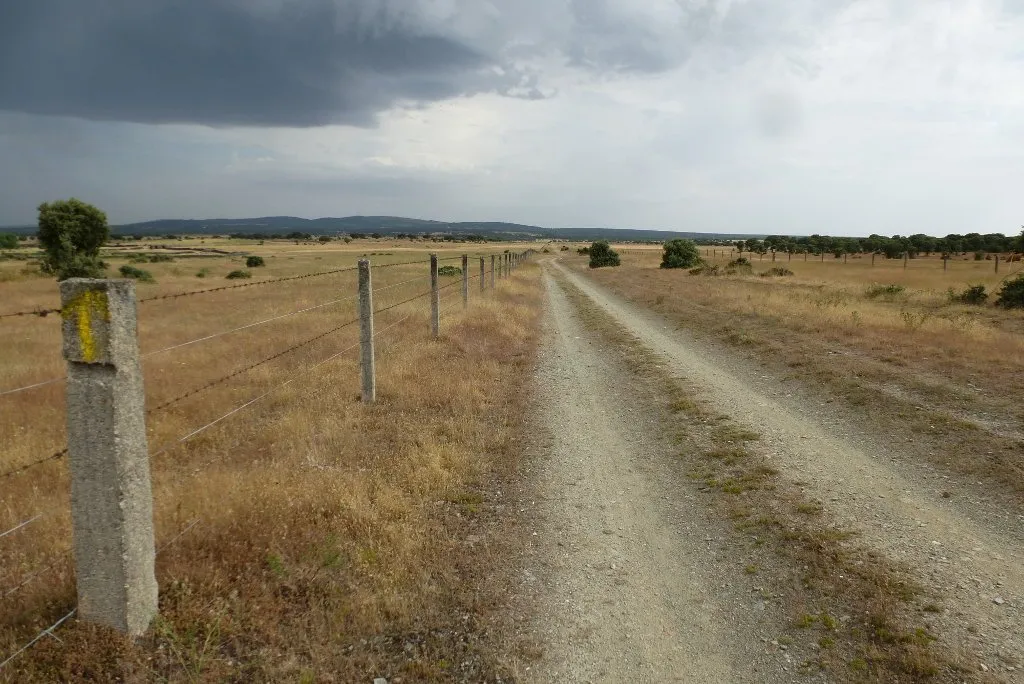
The tracks aren’t very tricky and I make quick progress. Since the stage ends in Salamanca, the plan is to get there early so I can see the city. But first there’s the climb up the Pico de Dueñas, 1,140 metres high. A pretty trail, rideable all the way, climbs steeply to the top.
The silence is broken only by the hum of the wind farm on the summit, and just before I get there I meet the only two pilgrims of the day.
From here, a lovely descent and some very kind tracks take me quickly to San Pedro de Rozados, where I make a short stop. Used to the villages of the north, I’m still struck by how hard it can be to find a bar in a village. I finally track one down and take the chance to eat something and, while I’m at it, get my pilgrim passport stamped. Although I’m not heading for Santiago, I do take the chance to get it stamped and act like just another pilgrim.
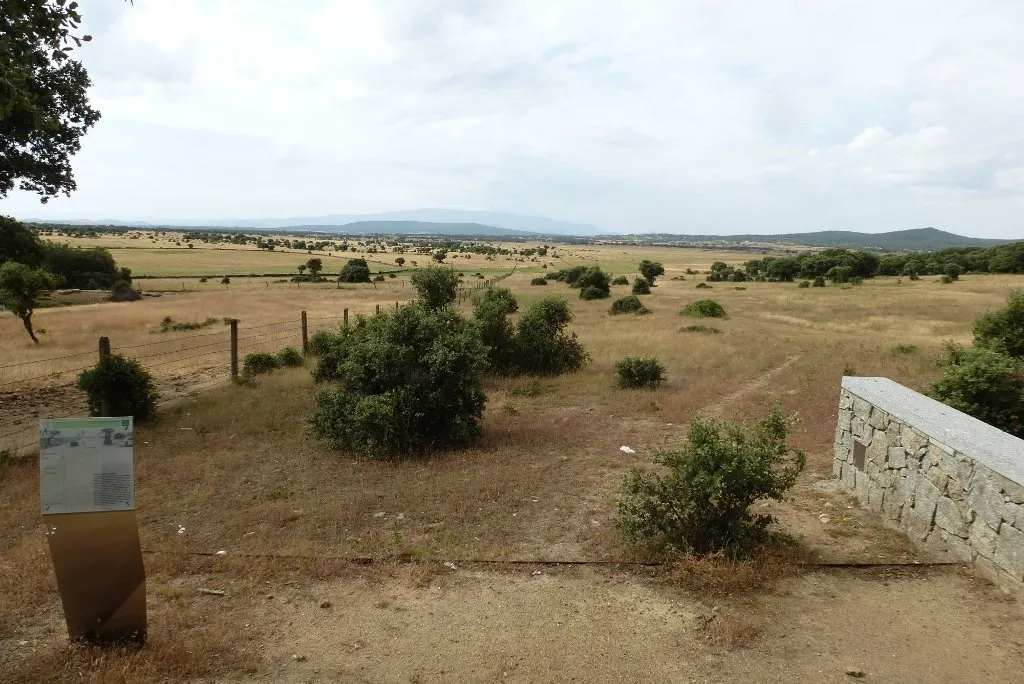
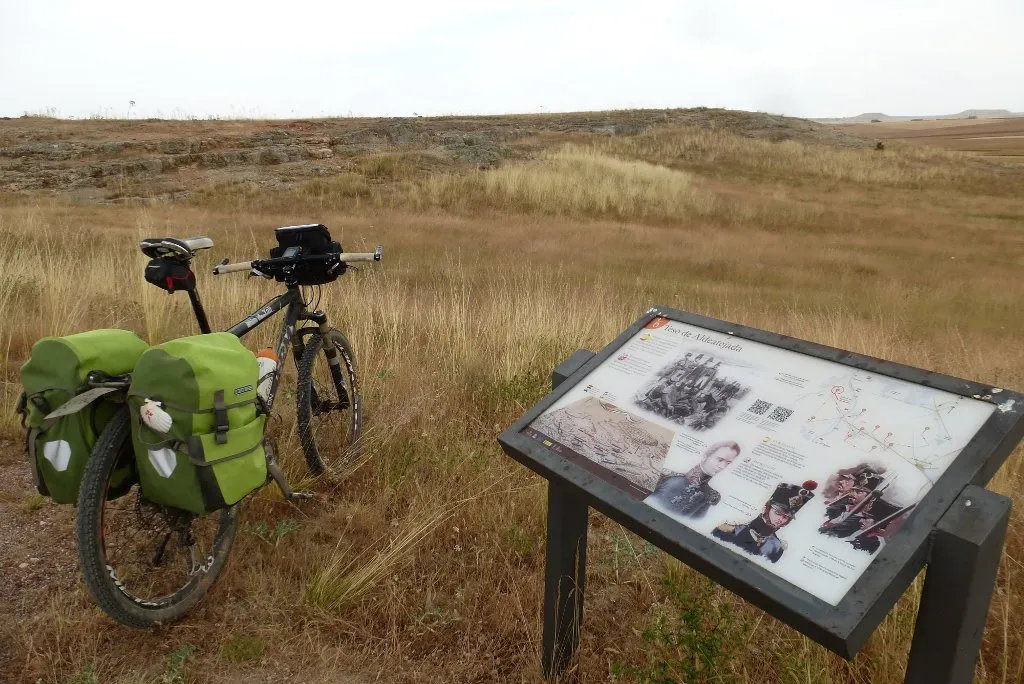
Only a few kilometres separate me from Salamanca now. The landscape changes and I cross long stretches of dehesa, the open oak pastureland of western Spain. Near Salamanca, in Aldeatejada, I stop to take in the place where the Duke of Wellington defeated the French troops at the Battle of the Arapiles, the Battle of Salamanca in English history books.
Behind me, Salamanca. A few more kilometres and I cross the bridge into this beautiful city. 70 kilometres, first stage done.